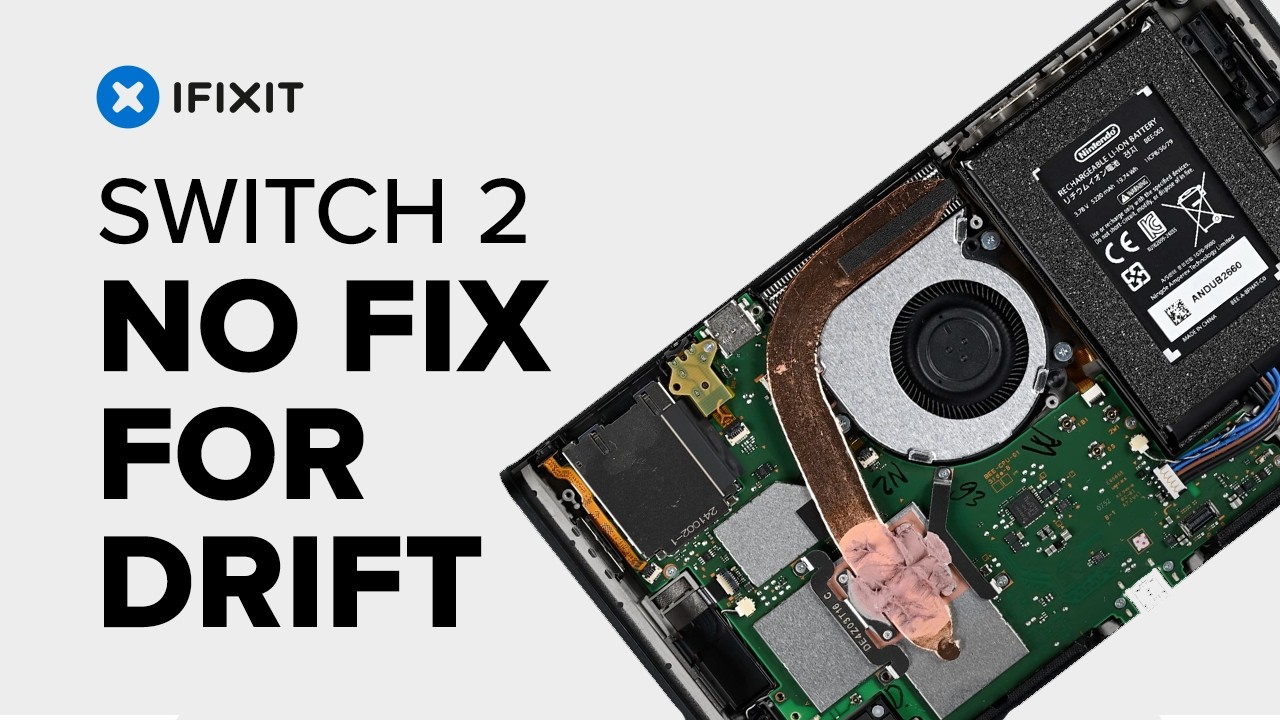
Time changes many things, not least expectations and what is and isn't acceptable. This is especially true of Nintendo's original Switch handheld console, which teardown specialists iFixit gave an 80% repairability score in 2017, but then last week to reflect the standards of 2025. Now it's , and after struggling with mountains of glue and soldered items, given a repair score of just 30%. Ouch.
Glue is certainly cheaper to use instead of mounting brackets and metal screws, but the Switch 2 is hardly a budget-priced offering. And as the , it's perfectly possible to go with a modular design for the components that are most likely to wear and fail in time, and still hit a desired price point.
Nintendo hasn't fitted the Switch 2 with Hall effect thumbsticks, so they will wear and eventually drift, but as iFixit notes in its teardownvideo, the new Joy-Cons are harder to disassemble. Even if they're more resilient and take much longer to fail than the original ones, the fact that it's going to be harder to repair them is disappointing.
It's not all bad news, though: The cooling fan is easy to pop out (at least once you've actually gotten inside the handheld) and if you're nifty enough with a soldering iron, replacing some of the ports and the game card reader shouldn't be too difficult. However, the main battery is glued so heavily to the chassis that there's a good chance you'll break something if you try to replace it yourself.

Obviously, what Nintendo is expecting you to do is send it back to them for repairs, or just buy a new one. The cynical part of my brain suspects that the various parts will last just long enough for an OLED version of the Switch 2 to appear on the market, at which point Nintendo will just push gamers to buy ufa888 that instead.
Repairability is more than just about scores and garnering good grace with reviewers. It's about reducing waste and sustainability—something that the electronics industry struggles with a lot. It's also about longevity, as a device that can be easily repaired can be sold many times, allowing for many more people to access the hardware.
For me, though, a highly repairable device is a sign that the manufacturer actually cares. Be it the consumer or the environment, putting repair into the heart of one's design shows that you're aware of the concerns of people and the impact your product has on the world. And as Valve has shown with the Steam Deck, you can do all of this and still make the device profitable. But for as long as the billions of dollars keep rolling in, Nintendo is never going to change its stance.
LuckyPlayer3843
The mobile interface is smooth and intuitive. I can play all my favorite slots on the go without experiencing any lag or glitches. The design is responsive and user-friendly, which makes gaming on my phone just as enjoyable as on my computer. Customer support has been outstanding whenever I had any issues. They respond quickly and professionally, ensuring that any concerns with deposits, withdrawals, or gameplay are addressed immediately, which makes me trust the platform more. The payout process is generally smooth and reliable, though occasionally it takes longer than expected. Overall, I feel confident that my winnings are safe and will be credited properly.